non_surgical
Starts from
₹36,750
per session
Sessions
Often 1–2 cycles per bulge on the arms; larger zones may need additional applicator passes.
recommended
Duration
35 min
per visit
Recovery
Minimal
downtime
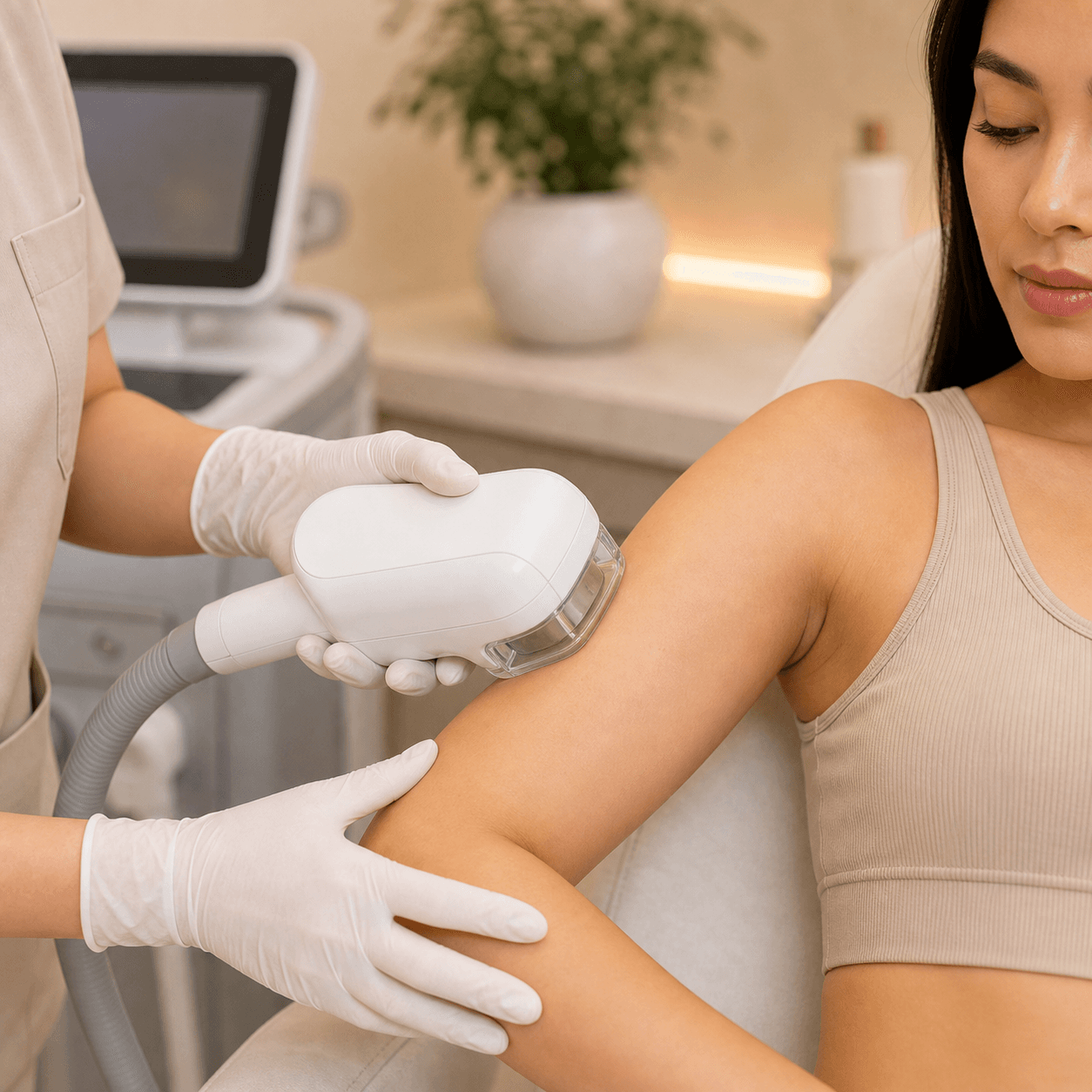
Body Contouring (Cool Sculpting) For Arms (Cool Fit) 1 Cycles uses controlled cooling (cryolipolysis) to reduce localised fat bulges on the arms without surgery. At AesthatiQ partner clinics, applicator size and treatment zones are mapped to your anatomy after clinician assessment. Fat cells cleared through this process are not expected to return in the treated zone if weight stays relatively stable.
Body Contouring (Cool Sculpting) For Arms (Cool Fit) 1 Cycles is performed by trained clinicians using clinically validated protocols. The plan is customised to your goals, anatomy, and recovery preferences after a detailed assessment.
Adults near stable weight with localised fat on the arms that resists lifestyle change
Those seeking contour refinement rather than large-volume weight loss
Candidates with realistic expectations about gradual results over weeks
Generally good skin elasticity so skin can retract as volume reduces
Timelines vary by person. For Body Contouring (Cool Sculpting) For Arms (Cool Fit) 1 Cycles, visible change is typically expected around: Early change around 4–6 weeks; more defined contour typically by 8–12 weeks.
Immediately
Treated the arms feels cold, firm, and numb during recovery from cooling
1–2 weeks
Mild tingling, itching, or bruising may occur — usually self-limited
4–6 weeks
Early fat-layer thinning often becomes noticeable
3 months
Near-final contour as inflammatory clearing completes
Cooling causes initial discomfort that peaks then fades to numbness; post-treatment soreness is usually mild.
Many areas need one to two cycles; stubborn bulges may need a second pass after 8–12 weeks.
Reduced fat in the treated zone is long-lasting with stable weight; it is not a substitute for overall weight management.
Very little — most people work and exercise the same day aside from temporary numbness.
Real explainers and patient stories