non_surgical
Starts from
₹3,150
per session
Sessions
One surgical procedure; lobe or piercing repairs may need a short revision if healing splits
recommended
Duration
60 min
per visit
Recovery
Minimal
downtime
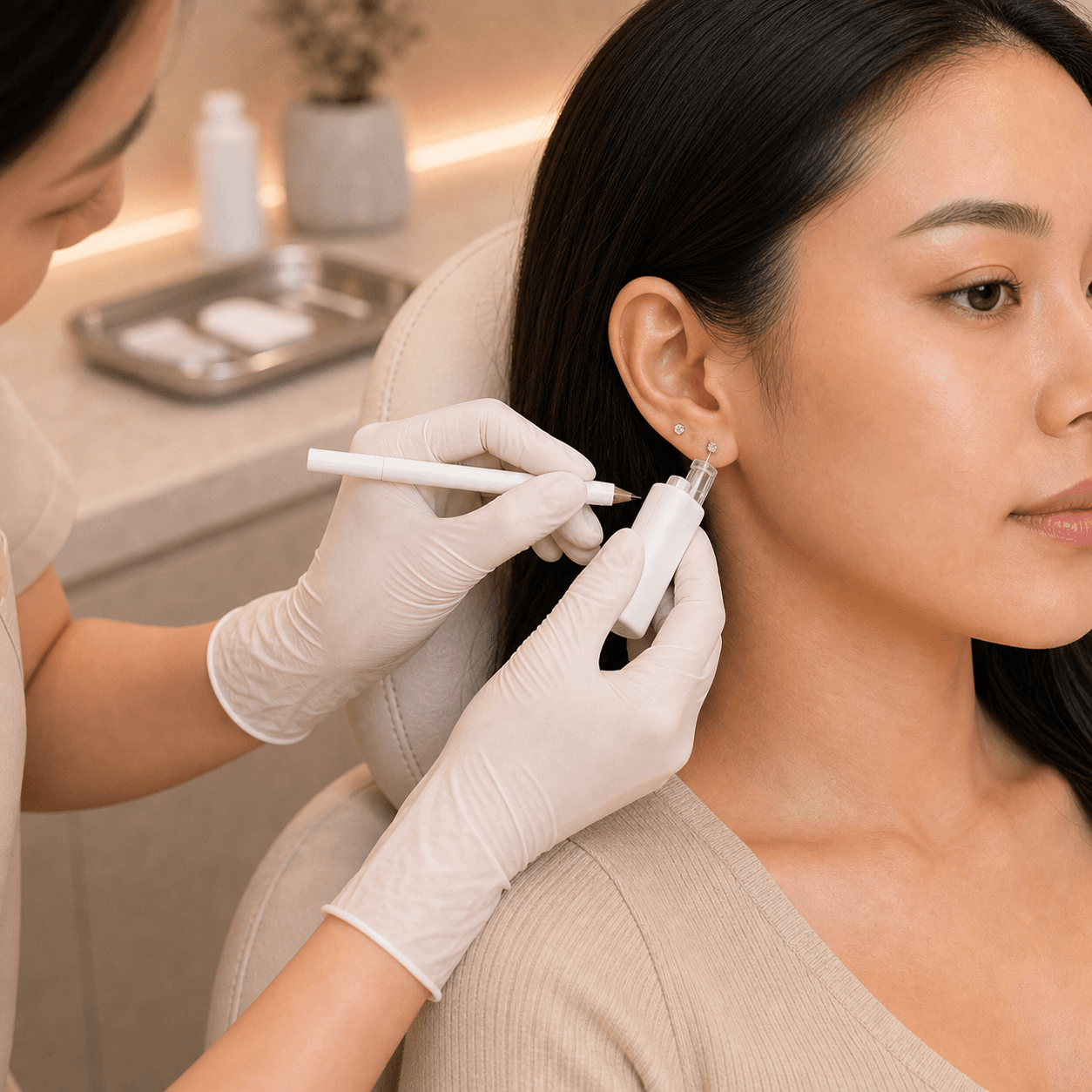
Ear Piercing With Stud reshapes, repositions, or repairs the treated area to address prominent ears, asymmetry, lobe damage, or piercing-related concerns when clinically appropriate. At AesthatiQ partner clinics, cartilage scoring, suture techniques, or lobe repair are chosen after examining ear structure and skin quality. A protective head band supports early healing; refined symmetry and contour settle as swelling subsides.
Ear Piercing With Stud is performed by trained clinicians using clinically validated protocols. The plan is customised to your goals, anatomy, and recovery preferences after a detailed assessment.
Children or adults with prominent, asymmetric, or damaged the treated area seeking correction
Those in good health, cleared for local or general anaesthesia as advised for the plan
People with realistic expectations about scar placement and gradual settling
Candidates willing to wear a protective head band and avoid pressure on ears during healing
Timelines vary by person. For Ear Piercing With Stud, visible change is typically expected around: Position change visible once bandages come off; final symmetry clearer at 4–8 weeks as swelling resolves.
Day 0–2
Protective dressing or band in place; mild ache and swelling expected
1 week
Dressing change; early position visible; continue head-band support at night
2–4 weeks
Swelling subsides; return to most daily activities with ear protection
2–3 months
Scars fade; final ear contour and symmetry settle
Mild aching and tenderness are common for a few days; children and adults usually manage with simple analgesia.
Most ear corrections are completed in one operative session.
Cartilage repositioning is durable; lobe repairs need gentle jewellery choices long term.
Plan about a week before full social or school return; sports restrictions last several weeks.
Real explainers and patient stories